


Updated in 2026 with new information
Few characters in sci-fi are as iconic as Morpheus from The Matrix. Laurence Fishburne plays a mysterious mentor who helped redefine what it means to question reality. While most fans remember the red pill speech and his unwavering belief in Neo, there are plenty of hidden details and behind-the-scenes facts you probably missed. From philosophical influences to surprising casting choices, these Morpheus facts reveal just how deep the rabbit hole really goes.
Morpheus Quick Facts
- Actor: Laurence Fishburne
- First Appearance: The Matrix (1999)
- Role: Captain of the Nebuchadnezzar
- Affiliation: Human Resistance
- Defining Trait: Unshakable belief in “The One.”
- Famous Quote: “What if I told you everything you knew was a lie?”
1. Morpheus is Named After a Greek God
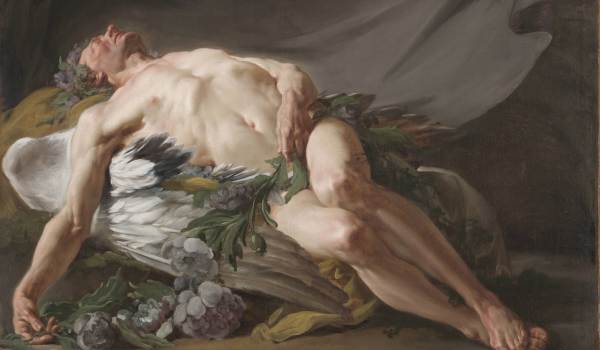
In Greek mythology, Morpheus is the god of sleep and dreams. This is meant to be ironic since, in the movie, he actually wakes people from the dream created in the Matrix. The “Matrix” is a vast simulated reality created by intelligent machines. Although he did promise Neo he would “wake up” in his bed, thinking their conversation had happened in a dream. Morpheus’ belief in Neo becomes even more interesting when you consider the deeper meaning behind the Matrix trilogy, which explores how prophecy and control are intertwined.
2. The Dojo Fight Scene Isn’t Inside the Matrix
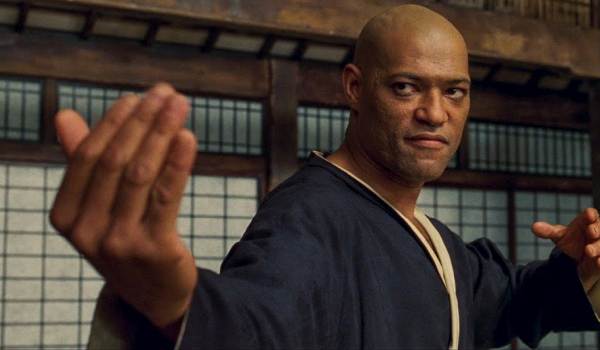
One of the most memorable scenes—the dojo fight between Morpheus and Neo—doesn’t technically happen inside the Matrix. When Neo and Morpheus spar, many audiences assume it takes place in the Matrix, but it’s not. All the scenes in the machine’s simulation world are tinted green. The Wachowskis chose this color to look like the audience is watching through a computer screen.
“One of the things we tried to do with the Neb for when we were shooting ‘in the real world’ was use long lenses to separate the humans from the backgrounds, as opposed to when we shot the Matrix, we used short lenses to place the humans in specific deep spaces.” They said in a 2018 chat. “We also tinted all of the lights blue in the ‘real world’ and green in the Matrix.”
All the scenes in the real world have a blue tint. Ironically, blue is the least common color in the natural world.
But the scene in the Dojo fight has a yellow color to it to show that it’s neither in the Matrix nor the real world. Morpheus says it’s a “training program” known as “the Construct”.
3. The Nebuchadnezzar Has a Hidden Biblical Meaning

Morpheus’ ship, the Nebuchadnezzar, is a Biblical reference to King Nebuchadnezzar II of Babylon, from the biblical Book of Daniel. King Nebuchadnezzar served as king of Babylon from 605 BC to 562 BC and was the longest-reigning and most powerful monarch of the Neo-Babylonian Empire. He conquered Judah as described in the Bible’s Books of Kings and the Book of Jeremiah. His capital, Babylon, is the largest archaeological site in the Middle East and was home to the “Hanging Gardens” of Babylon.
In the Bible Book of Daniel, Nebuchadnezzar has a dream he can’t remember. He said, “I have dreamed a dream, and my spirit was troubled to know the dream.” (Daniel 2:3). He’s so disturbed by the dream that he searches wise men for an answer.
In The Matrix, Morpheus travels into the simulation looking for people to wake up from the dream-like world created by the machines. The hovership is one of the greatest vehicles in the history of science fiction.
4. Laurence Fishburne Was Chosen for His Voice
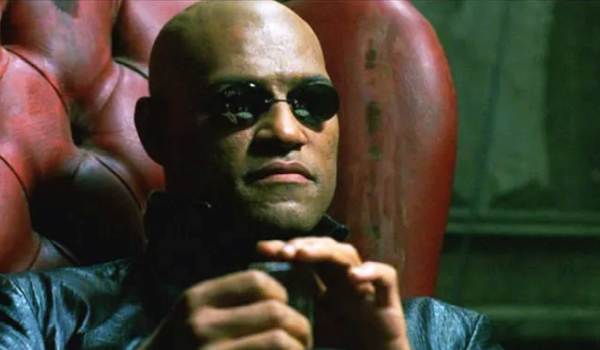
The filmmakers wanted Morpheus to have a powerful, authoritative presence. According to interviews, the Wachowskis specifically admired Laurence Fishburne’s voice, which carried a calm, almost prophetic tone.
“I was at the bite fight between Evander and Tyson in Las Vegas, and I see The Wachowski Brothers; they have their very introverted, shy guys thing,” he said. “Cut to we’re working and doing a movie, and at the end, they presented me with a gift of a beautiful rendering of Neo and Morpheus in the Dojo fighting with a couple of photographs. On the back, Larry (Wachowski) wrote, ‘I had a dream about a man who wore mirrored sunglasses and spoke in riddles, and when I met you and heard your voice, I knew that you were that guy.’ So he had heard my voice in his head. So that’s the deal.”
Fishburne said that he based his Morpheus voice on Walter Cronkite, the famous broadcast journalist and long-running anchorman for the CBS Evening News. It gave Morpheus the feeling of a preacher, philosopher, and warrior all in one—someone you instinctively trust.
5. Several Major Actors Almost Played Morpheus
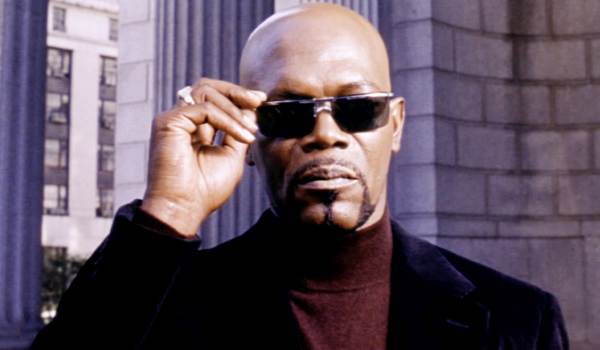
It’s hard to imagine anyone else in the role, but several big names were considered. MCU actor Samuel L. Jackson was considered for the role of Morpheus at one point, as well as British actor Gary Oldman. Will Smith later said he was offered the part of Neo but turned it down to appear in Wild, Wild West. He said the Wachowskis thought of pairing him with Val Kilmer as Morpheus.
In 2019, Smith acknowledged his mistake in turning down The Matrix and discussed how it might have affected Val Kilmer’s participation. “That was a crazy time in my life,” he said in his YouTube video. “The ball was going in no matter how I threw it.” At the time Val Kilmer had been cast, and Smith says he would have pushed to replace him. “If I had done it – because I’m Black – Morpheus wouldn’t have been Black,” he explained.
No doubt it would have been one of Kilmer’s greatest performances. Each would have brought a completely different energy, but Fishburne’s grounded intensity ultimately defined the character.
6. Some Actors Turned the Role Down
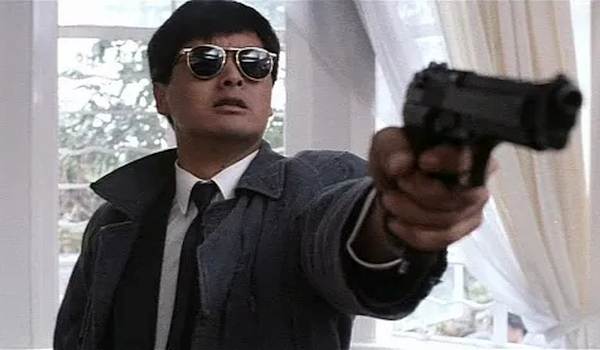
Even more surprising—some actors passed on Morpheus entirely. Russell Crowe turned down the role of Morpheus because it wasn’t “interesting” to him. “I just didn’t get it,” he said. “I couldn’t get past page 42. That world was just not interesting to me.” Chow Yun-Fat, a Hong Kong actor best known for working with John Woo in action films, turned down the role of Morpheus as well.
The directors hired comic book artists to storyboard the movie. The image of pills reflected in Morpheus’ glasses is straight out of the original concept art.
Laurence Fishburne says he felt his character is twice the Star Wars character Jackson is. “It’s like being Darth Vader and Obi-Wan Kenobi in one character,” Fishburne said. Morpheus is both good and evil in some ways.
7. Morpheus’ Sunglasses Were Custom-Made
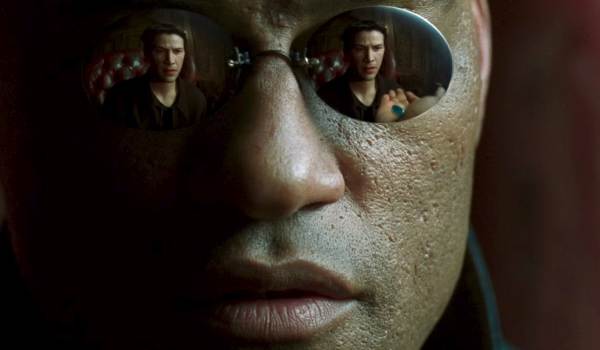
Those iconic, rimless sunglasses weren’t off-the-shelf. Designers created custom pieces specifically for the film, requiring them to be glued onto the actors’ faces for certain shots. Most of the sunglasses worn by the main cast are custom-made for the film. When the Wachowskis were developing the film, they produced storyboards showing Morpheus wearing small sunglasses with the reflection of the pills in the lenses. These types of sunglasses, ones that pinched the nose and didn’t wrap around the head, didn’t exist. The producers pushed for them to get glasses from the “Sunglass Hut” or a similar store.
Costume designer Kym Barrett commissioned indie designer Richard Walker to hand-craft the sunglasses. Barrett produced the illustrations, and Walker turned them into shades. To get the fit, the actors had to go through arduous plaster head cast sessions. He then custom-fitted each pair. “We only had two or three pairs of each [per actor] because Richard could only work so fast and he hand-made them all himself,” Barrett says.
The result? A futuristic, minimalist look that became instantly recognizable—and widely copied.
8. Morpheus Is Deeply Rooted in Philosophy
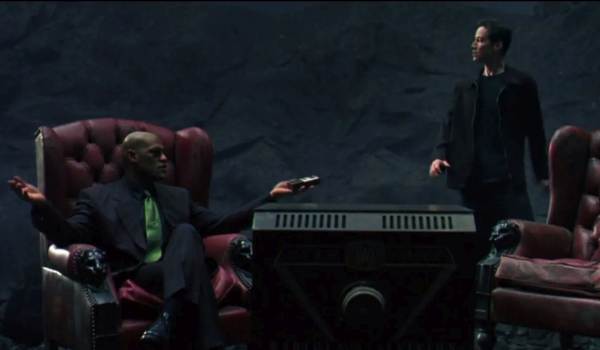
There’s a strong philosophical influence in the movie. It also has allusions to specific works. When Morpheus is explaining the reality of the Matrix to Neo, he uses the phrase “Welcome to the desert of the real.” This is a paraphrase from French sociologist and philosopher Jean Baudrillard’s “Simulacra and Simulation”. The quote can be found in “Chapter One – The Precession of Simulacra.” The book suggests that contemporary society has replaced reality with symbols, signs, and media images. He says we all live in a world where simulations of the world are more real than reality. Escaping a simulation for reality is the core message of the film.
The original quote is “It is the real, and not the map, whose vestiges persist here and there in the deserts that are no longer those of the Empire, but ours. The desert of the real itself.”
The book is one of many philosophy books the directors asked the cast to read, and appears in the movie as a hollowed-out book where Neo keeps his illegal software.
9. Morpheus vs Other Legendary Sci-Fi Mentors
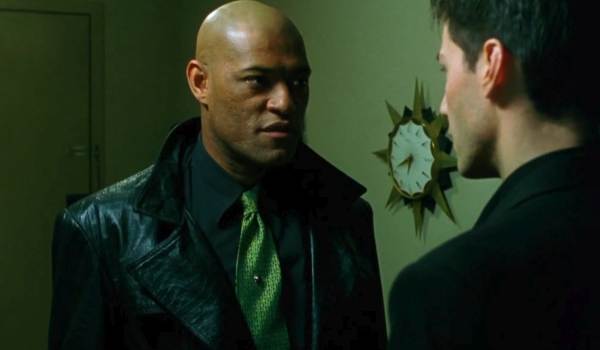
Morpheus blends elements of classic mentors like Obi-Wan Kenobi and other legendary guides in storytelling.
He stands among the greatest mentors in sci-fi, often compared to characters like Obi-Wan Kenobi and Yoda. While all three guide heroes on transformative journeys, their approaches differ in key ways.
Obi-Wan teaches through wisdom and experience, often relying on calm instruction and tradition. Yoda emphasizes discipline and inner balance, pushing students to master themselves before mastering the Force. Morpheus, however, operates on pure belief—he sees potential before it’s realized and is willing to risk everything on that conviction.
What sets Morpheus apart is his absolute faith. He doesn’t just train Neo—he believes in him when no one else does. That belief becomes the catalyst for Neo’s transformation, making Morpheus not just a mentor but the spark that ignites the story.
He doesn’t just teach skills—he instills belief. His unwavering faith in Neo is what ultimately drives the story forward. For better or worse, the sequels changed the meaning of The Matrix.
10. The Wachowskis Feared the Film Might Never Be Made
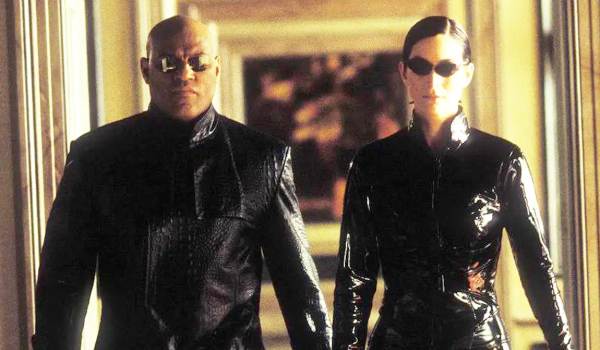
The filmmakers, the Wachowskis, said they had trouble making the film because many people they talked to didn’t understand the film. Laurence Fishburne said that after he read the script, he didn’t understand why people said it was confusing.
However, in the 2001 documentary The Matrix Revisited, he was amazed that the movie was made. “I’ve said to people often that you know a movie this smart,” Fishburne said. “It’s almost a miracle that it got made because it is so smart.”
Before The Matrix became a blockbuster, studios were hesitant to fund such a bold and complex idea. It paved the way for movies that explore dreams and reality, like The Matrix.
The Wachowskis had to fight to bring their vision to life, making Morpheus’ message about belief and persistence feel even more fitting behind the scenes.
Why Morpheus Still Matters in 2026
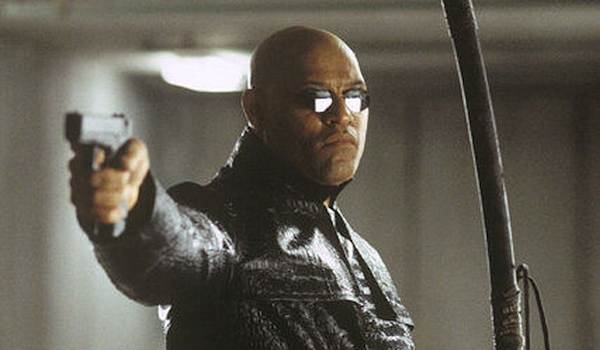
Decades after The Matrix first hit theaters, Morpheus remains one of the most relevant characters in science fiction. His message about questioning reality feels even more powerful in an era shaped by artificial intelligence, deepfakes, and digital worlds that blur the line between real and simulated.
The философical ideas behind the film—especially those influenced by Jean Baudrillard—have become part of modern conversations around simulation theory and the nature of perception. Morpheus doesn’t just ask Neo to wake up—he asks the audience to do the same.
That enduring relevance is why Morpheus continues to resonate with new generations of fans, proving that The Matrix isn’t just a movie—it’s a lens through which we examine reality itself.
Behind the Scenes of Morpheus in The Matrix
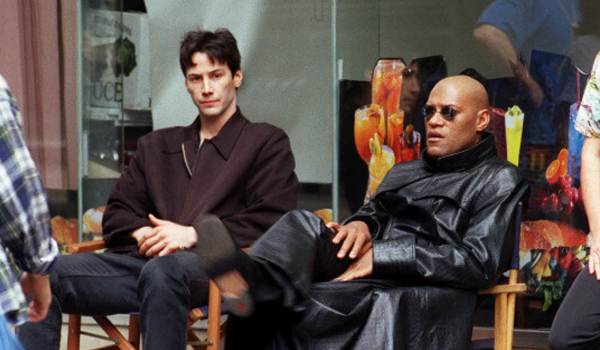
Bringing Morpheus to life required a careful blend of casting, performance, and design. The Wachowskis envisioned a character who could command attention with both physical presence and интеллектуal depth, which is why Laurence Fishburne ultimately stood out.
The role nearly went to several other actors, and some even turned it down, as the film’s концепт was considered risky at the time. To prepare, Fishburne underwent fight training and worked closely with choreographers to master the film’s groundbreaking action sequences.
Even Morpheus’ look was intentional. His sleek wardrobe and iconic sunglasses were designed to reflect control, mystery, and detachment from the illusion of the Matrix—helping define one of the most recognizable visual styles in sci-fi history.
Best Morpheus Quotes That Define The Matrix
Morpheus delivers some of the most memorable lines in The Matrix, each packed with deeper meaning.
- “There is a difference between knowing the path and walking the path.”
This line captures the film’s core idea: knowledge alone isn’t enough—action is what defines reality. - “I can only show you the door. You’re the one that has to walk through it.”
Morpheus emphasizes personal choice, reinforcing that transformation must come from within. - “What if I told you…”
Perhaps his most iconic phrase, this line symbolizes the moment everything changes—the invitation to question reality itself.
About The Matrix (1999)
Official synopsis: “Set in the 22nd century, The Matrix tells of a computer hacker (Reeves) who joins a group of underground insurgents fighting the vast and powerful computers who now rule the earth. The computers are powered by human beings…”
Directed by The Wachowskis
“The Matrix” stars Keanu Reeves, Laurence Fishburne, Carrie-Anne Moss, Hugo Weaving, Gloria Foster, Joe Pantoliano, Marcus Chong, Julian Arahanga, Matt Doran, Belinda McClory, Anthony Ray Parker, Paul Goddard, Robert Taylor, David Aston, Marc Aden Gray,
“The Matrix” was released on March 31, 1999 (United States)
Check back with the Geek Twins for more The Matrix movie news and hype!
Did you learn anything new about Morpheus? Did we miss anything? Let us know in the comments below!
Note: Some links may lead to an approved affiliate, and small proceeds from the sale go to support the blog. Thank you!
If you enjoyed this, then please use the buttons below to tell your friends about this post! Follow us! Email | RSS | Twitter | Facebook
Discover more from The Geek Twins
Subscribe to get the latest posts sent to your email.
