




The Matrix (1999) was a cinematic marvel, but thanks to the sequels it’s a huge mess and I’ll explain why. When a movie does well studios always push for a sequel. I can understand how much pressure the Wachowski’s were under. Their first movie, Bound, was critically acclaimed but not exactly a block-busters. Suddenly, men with suits are shoveling money at them and people were begging for more of this amazing film. So, the decided to go for it and make a trilogy.
They expanded on ideas they had from the first film and came up with a storyline, plot and new characters. They brought back the actors and tried to recreate the magic. They failed. In the process they destroyed everything they worked for and have to spend the rest of their lives living down the success of the first film and the failure of their other films like Speed Racer and V for Vendetta.
But why? Why was it such a bad idea to do the sequels? Because the sequels destroyed the visual effects, the characters and the plot of the first film itself. Let’s see how.
1. How Do You Define Real Fights?

One of the most remarkable things about the first movie is how realistic the fight scenes were. The actors were trained for four months to fight using traditional wire techniques and expert martial arts coordinators. The fights we saw were mostly using the main actors. There were many stylized fight scenes, but they were mostly done using traditional techniques like wire and other in-camera effects.
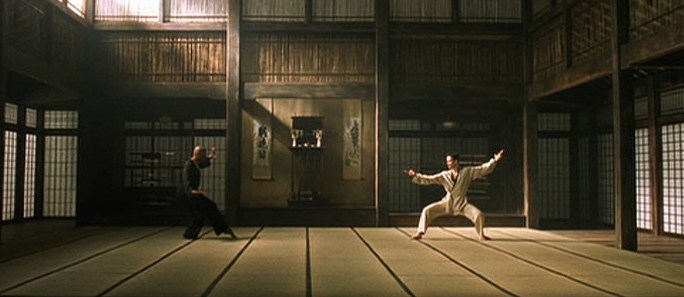
One really good example of this is the fight between Morpheus and Neo in the Dojo. Flips, turns and counters gave the scene an almost unrealistic feel, but being able to zoom in on the actors and see their faces made it better.
The sequels used some of the same techniques, and the Wachowski brothers bragged that there were more punches in the sequels than in the first one, but a lot of the scenes were done using CGI models. One sequel had 804 special effects shots. This totally breaks the realistic feel the fight scenes had.
Yes, the fights were more spectacular and they could shoot in ways that they never could using in-camera effects, but the trade-off is that the fights don’t feel real.

The best example of the this is the so-called “Burly Brawl” between Neo and hundreds of Agent Smiths. Many scenes were done using real actors but most of them were computer generated including the final sweeping battle using a pole. The scene looks amazing, but doesn’t feel real.
Looking back at the first movie the fights seem simple and basic compared to the mammoth CGI fight scenes from the sequels.
2. Welcome to the Real World. Now Start Dancing.
 In the first film everything in the “Real World” outside the Matrix is dirty, old and worn-out. All life on the surface is extinct and humans are forced to eat a disgusting soup of synthetic proteins to survive.
When they go to Zion in the sequels though there seems to be plenty of food. So, why send out ships without provisions? It seems like a cruel joke. Cypher complains about being cold and eating the “same goop day after day.” It provides him with the motivation to betray his crew because life is so horrible in the Real World.
But, in the sequels life is pretty good for humans. Sure Zion is underground, but they seem to have nice food since everyone is healthy. The clothes are kind of simple, but nice and dramatic. They even have time to have a rave party or two.
So, Cypher ends up looking petty. What he should have done is just ask to be transferred back to Zion on shore leave. That would have saved the life of Switch, Apok and Dozer. Plus, he could always have come back in the sequels.
So, after the sequels the character motivations seemed moronically simple.
3. The Prophecy Speaks of the One

The biggest problem the sequels create is the explanation of the prophecy as a massive plan by the machines to maintain control. At first it makes sense.
But, take away the metaphysical aspect of Neo and you’re left with a plot device with gaping holes. The people are told to look for someone with the characteristics that Neo has. What have they been looking for? Someone that’s good with computers? Someone that’s a loner?
At first its not really explained where the prophecy came from, but its implied that there was a leader who would return in the form of “The One.” They never said who wrote it, but its implied that the Oracle has some knowledge of the prophecy and is guiding the humans to find him. But, who wrote it? How did they know what to look for?
In the sequels it turns out the machines created the prophecy to weed out people who would naturally rebel at being in the Matrix and group them together in a fake resistance movement. Then, they could easily corral them together and kill them.
Here’s the problem though. Everything in the Matrix takes massive amounts of coding and power. If the machines know people are going to take it down why bother rebuild it again?
Another problem with the machines creating the prophecy is the Agents. The Agents are sent in to help maintain control and take down the resistance. But, apparently this is a lie. This means the machines are wasting time and energy chasing down a rebellion that they created.

There’s an even bigger problem with this though. Agent Smith’s motivation for attacking Neo and Morpheus is that he can’t stand being in the Matrix anymore. He says it smells. It makes him look like a slightly tortured character and gives him motivation to be beyond his programming to squash the rebellion.
In fact, it turns out he’s a big sap and the machines are lying to him. Since Smith doesn’t know the truth we can assume that it’s a closely guarded secret among the machines. Here’s a question: What would happen if the Agents found out it was all a big joke? Would they join the resistance?
The whole point of the Matrix was that the machines were so desperate to find power they would build a massive virtual world to hold the humans in. But the Architect said that the machines are willing to live without the power the humans provide. So what’s the point? Revenge?
In the first movie the machines seem cold, calculating and superhumanly intelligent. By the third movie they look pretty stupid. Kind of like they were making it up as they went along.
4. When You See An Agent…You Run. At First.

In the first film the Agents are all-powerful and virtually unstoppable. They say when you see an agent you run. They were nameless, faceless and omnipotent.
In Matrix: Reloaded the Agents are a joke. Despite being upgraded anyone can beat them. Neo, of course, can handle them because he’s more powerful, but why can Trinity or Morpheus handle take them out so easily?

Because the main villains are weaker in the sequels they have to add a whole bunch of “more deadly” enemies. Like werewolves and vampires. Inevitably the other villains just end up looking cool, but don’t have the power and impact of the black-suited agents from the first film. They become so useless that they were eliminated completely from Matrix: Revolutions.
In the end we look back on the agents and wonder what the big deal was.
5. There Is No Spoon In The Sequels

In the first movie, the Matrix is populated with real people. The world seems kind of sad and tragic at the same time. There were old women, children, businessmen and homeless people.
It felt real and the world was populated with people that react with horror and shock to the over-the-top things the characters are doing like jumping across roof tops and dodging bullets.
By the second and third movie no one seems to notice anything. Most of the people they interact with are either programs or from the real world and know exactly whats going on. They don’t think there’s anything strange about running up a wall or fighting three guys with their pinky. Everyone else just seems to walk blissfully by as the heroes topple cars, fly through the air and destroy buildings. This has the opposite effect.
Something is only interesting if its unique. The simple act of Trinity running over rooftops becomes more spectacular when we see people trying and failing to do the same thing. When someone says “that’s impossible” we’re convinced we’re seeing something magical.
By the third movie they film-makers have to make things more and more spectacular till finally it becomes impossible and our brain shuts down. Hundreds of Agent Smiths fighting in the rain is less interesting than seeing one person jump from one building to another when it feels real.
6. Perhaps We Are Asking the Wrong Questions

Should the sequels have been made at all? Not really.
The story was self-contained. The explanation of what happened in the past was answered by Neo and could have made a good prequel. The question of what happened next was strongly implied by Neo saying he was going to show the world what was possible.
We could assume that Neo flying into the sky on a busy street would raise a lot of questions and lead to a full scale revolt against the machines. This would allow humans to break free of the Matrix’ control and destroy them. We would imagine hundreds of people running, jumping and flying through the air fighting Agents and destroying the slavery of the virtual world. The remaining humans could finally leave the underground caverns and return to the surface using the new-found revolutionaries to finish the battle and rebuild our world. Pretty satisfying.
Where would the Wachowski’s have been without Matrix Reloaded and Revolutions? They would have stayed the directorial geniuses they had become and could have gone onto any number of projects without having to live up to the one project that made them Hollywood darlings instead of creating two films that tried and failed to live up to the iconic Matrix.
They were actually approached to direct Batman Begins, but turned it down to work on the Matrix sequels. That would have been a mind-blower.
What if they’d gone a completely different direction? Maybe they could have made a comedy. Maybe another drama. Instead they threw all their efforts into trying to get lightning back into a bottle and forcefully proved that the first film was an accident. They’ve never been taken seriously since.
In the end, the sequels destroyed the characters, message, visual effects and genius of the first film. Some things should just be left alone.
What do you think? Did the sequels make the Matrix Better or worse?
[Image Source: Matrixfans, seattlepi.com, cinemasquid]


9 Comments
it's so true, such a great original film and such horrid horrid sequels!
Thanks Dez. To bad they didn't leave it well enough alone.
Dear friends: The problem here is that you didn´t grasp the real story at all.
It's impossible to understand the entire trilogy if you didn't watch "Animatrix" and even so that "understanding" doesn't result easy or immediate.
It's quite long to explain here but the short version is this: Failing to see the whole picture leads anyone to think the sequels are pointless.
So, from your point of view, I can't say you are wrong =)
We all know that many sequels are motivated by the opportunity to ride a wave of audience mania and make a pile of cash, period – discussion on this point complete.
Unfortunately, sequels often distort or bury the charm of the source
film. This is true in the case of Star Wars. The essential beauty and
magic of Episode IV was that enough was put before the viewer to allow
the imagination to fill in the Universe before and after the depicted
events. This is the essence of well executed fiction (and art) — put
enough on the canvass to imply what cannot be seen and engage the
imaginative power of the observer to unfold the surrounding universe as
he or she sees fit or does automatically. Sequels (once created and
watched) dismantle the imagined but all so crucial extended universe of
events. In fact, it is precisely this effect (the automatic unfolding of
imagined but not depicted events before and after, etc) that makes
Episode IV stand out — alone — as a great movie. This is true of
written fiction. It is true of sketches and paintings. Each provides a
small window or glimpse so convincing that one accepts the illusion that
the imaginary universe is full of moving parts, history, etc. Sequels
(true of series like the Matrix as well) spoil the effect — and sadly,
this is done to make a buck. My hope is that a film like District 9 does
not suffer the same fate. Sure, we would all like to "see" the aliens
return to earth to save our Hero — but we don't need to see it! We see
it in our imaginations when we leave the theater — and this is the
effect that makes the source film so precious, so valuable, so artistic
— so real.
Certainly, someone like G Lucas knows what he is doing — and is expert
in the fashioning of illusion and the importance of implied greater
reality. Unfortunately, the attraction of wealth (and with it freedom)
must draw artists into the unholy act of trading away a source film's
magic.
Sequels are generally destructive. Too self-conscious, we see the film
maker making movies whereas before, we saw only an imagined world
stretching off in all directions in our own minds.
Great article, Maurice, and one that spells out many of the problems inherent with the sequels, others ones I could mention myself; if Neo jumped into the Agent Smith program and deleted him (which I presume is what happened) then how could Smith return for the sequels, where exactly did Trinity get the machine pistols in '…Reloaded' just before she jumped out the window, and why did Smith want access codes to the Zion mainframe if the machines already knew where Zion was… I could go on, but you get the idea…
I honestly don't know if the Wachowski brothers had the entire trilogy planned out in advance, but considering how much retconning was going on for the sequels, I tend to think either they didn't, or they only had a rough outline idea of where to go in the event of getting sequels and simply didn't have enough time to fully develop all the ideas they had for the sequels before filming was to begin, or worse that they did indeed have the time to write two great sequels but stretched themselves too thin with all the extra stuff like the video game or the Animatrix shorts or the comic-books or the online multi-player game… whatever it was, something went wrong, unless the Wachowskis actually WANTED the movies to turn out like that, in which case, sheesh dudes…
I personally think that the Wachowski brothers could have made 'The Matrix Reloaded' a single three-hour sequel that picked up the story three years after the first film, and see the machines in severe jeopardy as Neo has freed so many people from the Matrix that their power source and long-term survival is dwindling rapidly, in response, the machines capture a hovership intact and discover the location of Zion, drilling down from the surface to the last human city with 250, 000 Sentinels ready to kill every last human there, and over the course of the film, Neo is given the choice by the Architect to either leave the Matrix and return to the Source or Zion will be wiped out forever… he declines the offer in order to save Trinity but the emergence of the rogue Smith program threatens both human and machine alike, and allows Neo to strike a bargain with the machines to reenter the Matrix for a final showdown with his viral nemesis that will decide the future of both worlds forever. With no Zion rave scene, no orgasmo-cake scene, no bathroom kiss scene, and no Club Hell or Train station scenes, '…Reloaded' could have been a pretty good sequel, alas…
Rorscach that is great. You came up with things that made even less sense. I know the Watchowskis definitely had some of out planned. I read Art of the Matrix and it showed concept art of the robot suits from Revolutions with the hope they would show up in the sequels. But it was just a rough sketch and not a complete picture.
I wish they had done the sequel that way you layed out. You should make a fan cut!
Thanks for your comment!
Thanks for the kind compliments, Maurice, it was just a suggestion on my part how that whole epic sequel story – as highly flawed as it still is – could have been presented in a more concise and engaging manner than the lamentably sophomoric and drawn-out way it turned out…
The Wachowski siblings may have planned it as a trilogy from the start, but the sequels ultimately showed why the original film worked so brilliantly; it was a self-contained film that simply needed no further installments, it was Neo's character arc from zero to (super) hero that was the heart of the movie, it was the journey not the destination that made 'The Matrix' what it was, and once that journey had come full circle by the end of the movie, any further installments would – and indeed did – end up looking ultimately redundant.
Oh, just thought of two more things the sequels backtracked on; if Neo can move faster than anyone else alive then how come he couldn't even get to TWO doors at the Merovingian's building before they closed when he was only a few paces from them, and if Smith kicked Morpheus' butt in the bathroom scene of the original film then how could Morpheus take on the supposedly 'upgraded' Agent Brown so effectively in the freeway chase in '…Reloaded'?
Alright, that's really me done now, kudos again on a great article, Maurice, have a cold one on me :-)…
Interesting ideas there, but I think the whole Matrix sequel enterprise was a case of TMI overload – too much information – the Wachowskis simply had too much on their collective plate at once to fully excel in one medium; the Enter the Matrix video game, the numerous Animatrix short films, the comic-book stories, and that short-lived online game, if they really had planned out the trilogy storyline from the beginning (and I'll take them on their word that they did without proof otherwise), they should have concentrated on the two films- and the two films alone- and dropped everything else, maybe then we would have got two great movies that stood alongside the fantastic original, it was a sad and wasted opportunity that hurt both the Wachowskis' standing in Hollywood but also the legacy of the original film, which if they'd left alone, they would still be living legends in the sci-fi and film world regardless of whatever they did after it, alas, it wasn't to be.
So unless you watch not only the two movies, but the Animatrix shorts, plus watch and play the video game, you don't get get the full story, is that correct? Isn't that a bit cheeky, not to mention smacking of profiteering, not every (I would even say most) audience member(s) who went to see either '…Reloaded' or '…Revolutions' had seen either of those things, meaning they started at a disadvantage over other audience members… is it any wonder most people thought they were incomprehensible gibberish!?
Maybe if the Wachowskis had concentrated all their creative focus on just the two films and the 'Final Flight of the Osiris' animated short prologue, those sequels could have been better and more satisfying… although I still contend the original movie needed no sequel(s), but if they were – and indeed did – doing thus, then Warner Bros should have forced the Wachowskis to focus on the priorities of that project; namely, the actual movies, and not the other nonsense that simply clogged up the works and more than likely stretched the brothers' creative energies too thin… to the detriment of the eventual movies, in my opinion, 'nuff said.