


One thing that I have found most annoying about the movie Avatar
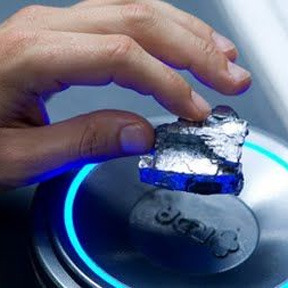
First of all, we need to define what unobtanium is, according to Avatar. It’s never stated in the movie, but the background material
Well, a regular conductor like copper allows electricity to flow through it with some resistance, meaning that some of the electrons are blocked or absorbed. That means you have to use more power than you actually need to run something, like an electromagnet. It also means electrical signals (like, say, in a computer) take longer to get around, so the computer runs slower. A superconductor is any material that allows electricity to flow through it with no resistance, which means you can use less energy to achieve the same effect. Less energy means less money. It also means electric signals move faster, so machines like computers run faster. Faster is good.
The problem with the current superconductors is that they require the substance to be cooled to sub-zero temperatures. That’s difficult and inconvenient and relatively expensive. The Holy Grail of superconductors would be one that runs at warmer or even room temperatures. That’s where unobtanium comes in. Whether or not room-temperature superconductors are even possible is a matter of debate among physicists. Even the movie’s creator James Cameron is kind of casting doubt on the idea that it could exist since it’s called unobtanium in the movie. Obviously the name is based on the word “unobtainable,” implying that the substance couldn’t be obtained.
A lot of reviewers have criticized the name as being unrealistic and stupid. Others have defended it by pointing out that Cameron didn’t create the name “unobtanium” – it’s actually a long-standing joke in scientific circles for any substance that (as defined by Wikipedia) is an “extremely rare, costly, or physically impossible material, or (less commonly) device needed to fulfill a given design for a given application.” That may be true, but that’s still not an excuse for using the name. It’s a joke, but not a good joke. It’s distracting, like holding up a big sign every time someone says it that reads, “This is not real.” It pulls you out of the movie. It would have been better to call the substance something more realistic. I can come up with dozens like “pandorite” or “pandorium,” anything else but unobtanium. It would be like trying to enjoy Citizen Kane
Then there’s the price. In the movie, Selfridge says that unobtanium goes for twenty million per kilogram, which is about 2.2 pounds. The extraordinary cost of unobtanium is obviously supposed to explain why the RDA Corporation would expend so much time and energy to obtain it.
Think of it this way – you’re RDA. You stumble across unobtanium, and decide there’s big money involved in it. You spend trillions setting up the infrastructure to mine and transport unobtanium. You hire workers. You get spaceships to haul people and equipment there, and spaceships to haul unobtanium back. You need equipment, including huge drills, tanks, and military aircraft, but those would weigh so much that it would make transporting them difficult and expensive. Instead, you decide to just ship the parts, and assemble them on Pandora. You finally fill up your first tanker full of unobtanium, then haul it back to Earth, and say, “Okay, who wants some?”
Silence.
Why? The problem is simple economics. Twenty million dollars per kilo of unobtanium x two thousand pounds (which equals a ton) equals twenty billion dollars a ton. According to the official guide to Avatar, the ISV Venture Star can haul 350 metric tons. If they filled the ship’s hold with unobtanium, that would mean each trip’s haul would be seven trillion dollars’ worth of unobtanium. For perspective, that’s half the gross national product of the United States in 2009. The higher the price for a commodity, the fewer people can afford it. High price limits demand, since only the wealthiest customers are able to pay for it. Even with 144 years of inflation, no company or nation could afford to pay billions of dollars for its energy source. So in reality, the profit would be quite low on this enterprise, not enough to make it worthwhile.
(Note: I’ve seen some people try to argue with this logic by pointing out that Selfridge never said it was twenty million “dollars.” I don’t know what else we can assume he was referring to – the euro? Yen? Anyway, Selfridge didn’t have to mention dollars – the official scriptment did.)
Again, the movie tries to justify the cost by saying that Earth has no choice. Avatar’s official guidebook
Another issue to consider is that the official guide to Pandora
I suspect none of the details about unobtanium are provided in the movie, because of these exact problems. They might have decided that explaining why unobtanium is so important would have led us to question its value – which would have taken away from the black-and-white morality of the film. By leaving unobtanium’s value open to interpretation, we can imagine it as any kind of important substance, thereby allowing us to focus on how greedy the RDA is. I would call that flawed thinking, as well as flawed science.
BONUS: For more on why mining unobtanium from the ground is stupid, see my post on the floating mountains of Avatar.
The Flawed Science of Avatar
Discover more from The Geek Twins
Subscribe to get the latest posts sent to your email.

<span class="dsq-postid" data-dsqidentifier="42326 ">5 Comments
Second attempt at posting: the name is undeniably silly, but… a room temperature superconductor? Perhaps it's not "fuel" for either the spaceship or the future industrial economy, but a key component in constructing either a fusion reactor or a matter-antimatter reactor/rocket engine. After all, it would be hard to maintain 0 K in the presence of a fusion reaction. And it could conceivably be used up or shredded in the process, too. Also your mobile phone is full of incredibly expensive and rare elements right now – because only a few atoms of each are needed for each circuit or component.
You make some good points. I should have expanded on the fact that (per the manual) unobtainium is used to stabilize the matter/antimatter reactor that powers the spaceships. It's true that maybe they only use a fraction of the unobtanium for the process. So let's say they take that trillion-dollar payload and sell it atom-by-atom to various governments and corporations around the world. And let's say the individual atoms are cheap enough to be affordable. That means it would be possible to sell it by everyone sharing the cost.
But then one payload lasts longer, which means RDA has fewer shipments of unobtainium to sell, which also lowers profits.
You guys have Waaaaaaay too much spare time. It's a Movie. that's all. It might be more practical to criticize Gilligan's Island. Now there's a show with some BIG holes in the plot, ……….Knock yourself out!
Er ah the Character Jake Scully states unobtanium is "some sort of superconductor material" about 1-hour and 4-minutes into the movie. Personally, it is one of the few things about the movie that I hate. Cameron should have used a different word.
What's more, here is smoothing essential to know. A decent story is more essential than huge name stars, or embellishments. You can confirm this by checking the motion picture postings on TV. movies 123